Why a simple bracelet can still be a serious product decision
When buyers search for jewelry, they are often looking at much more than decoration. A bracelet can be a retail impulse item, a gift line, a seasonal accessory, or a low-risk add-on that helps round out a collection. The braided leather bracelet set in the product brief is a good example of that in-between space: not fine jewelry, not a disposable novelty, but a compact wearable product that still depends on material choice, finishing, clasp construction, and visual consistency.
That matters because this kind of wristwear lives or dies on first impression. If the braid is uneven, the metal fitting feels cheap, or the color looks off under store lighting, the piece loses value quickly. For sourcing managers and product teams, the real question is not simply whether the item looks good in a photo. It is whether it can be made consistently, presented cleanly, and positioned at the right level in a jewelry or accessory assortment.
What the product tells us at a glance
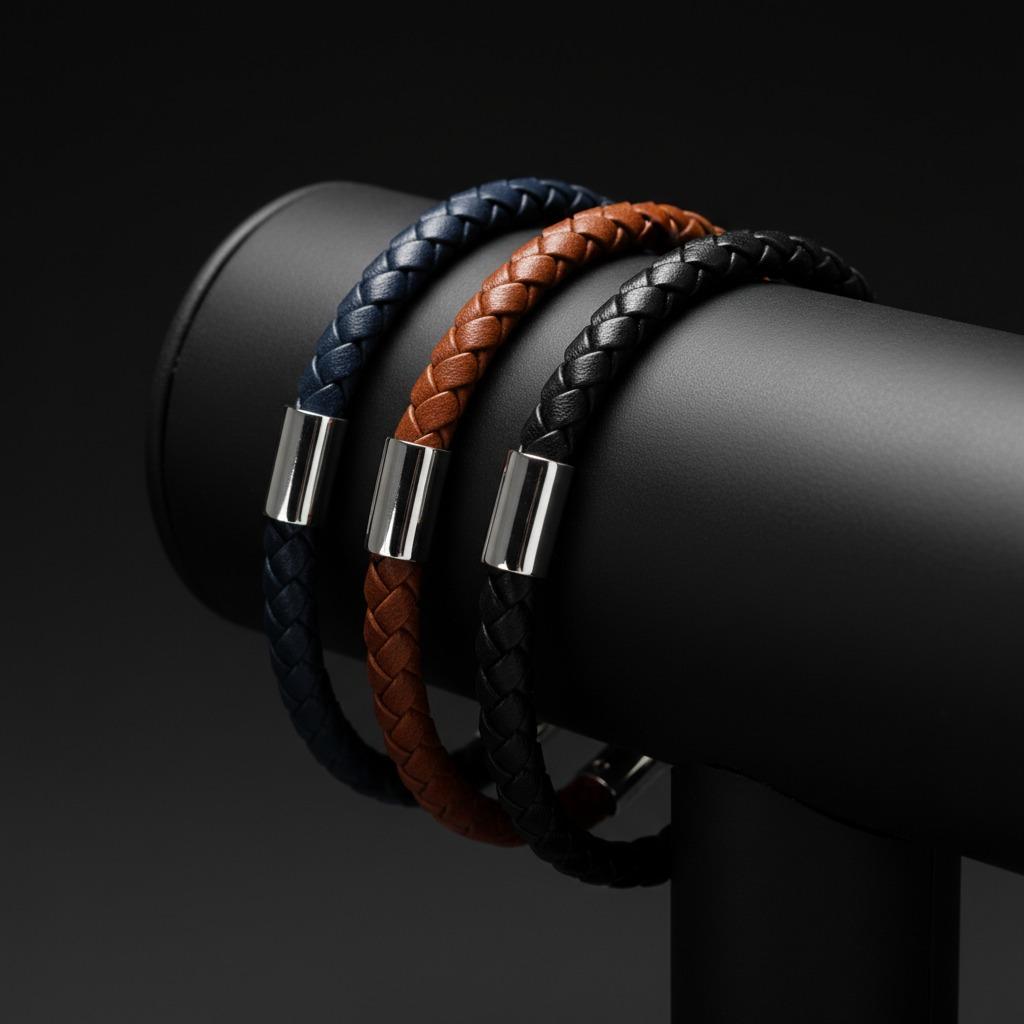
The item described here is a braided leather bracelet with a closed-loop form and a short polished silver-tone cylindrical fitting. Three colorways are visible: dark blue, brown, and black. The leather has a matte to semi-matte appearance, and the braid pattern is uniform rather than loose or rustic. That detail matters. A tight, even plait suggests a more controlled manufacturing process, which usually helps when a buyer needs repeatable shelf appeal across multiple units.
The metal element is also worth watching. A machined groove detail on a barrel-style connector can do a lot of visual work without adding decoration that might limit broad appeal. In practice, that kind of hardware often signals a straightforward fashion accessory rather than a highly ornamented piece. For many retail channels, that is a strength. It keeps the bracelet versatile and easier to merchandise with casual apparel, gift sets, or men’s and unisex accessory ranges.
Where this fits in the broader jewelry category
Not every jewelry line needs stones, charms, or precious-metal storytelling. A braided bracelet sits in the everyday accessory segment, where comfort, durability of appearance, and price positioning often matter more than formal jewelry language. Buyers who understand that distinction usually make better decisions.
A bracelet like this can sit in several product buckets at once:
Casual fashion accessory
The muted color palette and leather texture make it easy to pair with denim, knits, and relaxed apparel. That gives retailers flexibility, especially if they want items that do not look overly seasonal.
Giftable wristwear
Because it is compact and visually tidy, it works as a gift item. The three color variants can also support simple merchandising stories, such as “choose your shade” or “mix and match.”
Assortment filler
For stores building out a broader jewelry or accessory wall, a bracelet like this can provide a mid-price or entry-level option that visually balances more decorative pieces.
Material and construction details buyers should actually care about
The word jewelry covers a lot of ground, but for this type of product, the real evaluation starts with construction. The leather braiding is central. An even braid pattern is not just cosmetic; it affects how the bracelet holds shape, how the edge wears over time, and how polished the finished item looks on display. Loose braid tension or inconsistent strip width tends to show up quickly, especially in close retail presentation.
The finish also matters. A matte to semi-matte leather texture reads differently from glossy or heavily coated material. Matte surfaces usually feel more understated and modern, though they can also show wear in a different way. Buyers should ask whether the surface treatment is meant to age naturally or resist marks. The brief does not specify leather type, so it would be unwise to assume genuine leather, synthetic leather, or a blended construction. That should be confirmed before ordering.
The clasp or fitting is equally important. The visible silver-tone cylindrical hardware appears polished and mechanically detailed, which helps the bracelet look finished rather than improvised. But the exact closure mechanism is not visible, so it is not safe to claim how it opens, locks, or adjusts. In sourcing terms, that uncertainty should be resolved early, because closure design affects user convenience, failure risk, and even return rates.
Why the hardware deserves as much attention as the braid
A lot of accessory products are let down by the metal parts. The bracelet body may look good, but if the connector scratches too easily, discolors, or feels mismatched in proportion, the entire piece drops a tier in perceived value.
The silver-tone cylindrical fitting in this item does a few useful things. First, it creates a visual anchor at the front of the bracelet. Second, the machined grooves give the hardware enough detail to look intentional without overpowering the braid. Third, the compact shape keeps the piece from feeling bulky on the wrist, which is a practical advantage for casual wear.
That said, buyers should not confuse polished appearance with durability. The brief does not identify the metal composition, so any claims about corrosion resistance, plating quality, or skin compatibility would be guesswork. For a retail program, those details are worth confirming through supplier documentation or sample testing, especially if the product will be sold in warmer climates or in high-turnover display cases where handling is frequent.
How to evaluate this type of bracelet before placing an order
For a product like this, the most useful selection criteria are plain and operational.
Check the braid consistency across samples. If one unit looks tight and another looks loose, the line will not merchandize well.
Inspect the transition between leather and metal. This is where fraying, uneven insertion, or visible gaps often appear.
Compare color under different light. Dark blue, brown, and black can all read differently under store LEDs than they do in a studio photo.
Ask for closure samples or a clear mechanism description. If the clasp is awkward, the bracelet may be attractive but annoying to wear.
Confirm whether the item is sold individually or as a set. The brief mentions a bracelet set visually, but that should not be assumed commercially without confirmation.
Consider how the accessory will be displayed. A braided bracelet with a clean metal accent usually looks best when the hardware is visible, not buried in packaging.
Common mistakes buyers make with fashion jewelry and wristwear
The first mistake is overfocusing on style and underfocusing on repeatability. A bracelet may look strong in one photo, but if the braid width varies or the clasp alignment shifts from piece to piece, the range becomes harder to sell.
The second mistake is assuming that “leather” tells the whole story. It does not. Buyers need to know the material makeup, surface finish, backing structure, and any treatment that affects flexibility or colorfastness.
The third mistake is treating hardware as a minor detail. On a product this size, the clasp is not a small part. It is one of the few elements customers can physically notice immediately, and it shapes the perceived quality of the entire piece.
A smaller but still common issue: retail teams sometimes overcomplicate the assortment. This kind of bracelet works because it is restrained. Adding charms, oversized branding, or too many decorative changes can dilute the straightforward appeal that makes the format useful in the first place.
What this product is best suited for
From a merchandising standpoint, the braided leather bracelet format is best suited for casual fashion channels, gift-oriented displays, and accessory collections that need clean, low-fuss items. It is likely to work well where the buyer wants a product that looks finished but not overly formal.
The three color variants are especially helpful. Black usually serves as the safest baseline, brown can lean slightly more classic or earthy, and dark blue adds a less expected option without becoming difficult to wear. For assortment planning, that mix can support a small, balanced capsule rather than a crowded wall of near-duplicates.
Practical advice for sourcing and sales teams
If you are evaluating this bracelet for retail or private label use, start with sample consistency rather than photography. Photos can flatter a product that will not hold up in hand. Ask for multiple pieces from the same run if possible, and check the braid, the clasp alignment, and the overall finish side by side.
It is also wise to clarify packaging early. A bracelet like this can be sold very differently depending on whether it arrives on a card, in a pouch, or in a simple bulk format. That affects not only shelf presentation but also shipping protection and perceived value.
If the goal is gift retail, even a modest product can benefit from clean presentation. If the goal is broader jewelry assortment placement, the bracelet should be judged on how easily it fits next to other accessories without looking too busy or too plain. That balance is often harder to achieve than it sounds.
FAQ buyers usually ask
Is this a fine jewelry item?
No, based on the product details available, it reads more clearly as a fashion accessory or casual wristwear piece than fine jewelry.
Can we assume it is genuine leather?
No. The brief describes braided leather straps, but it does not confirm the leather type. That should be verified directly.
Is the bracelet adjustable?
The mechanism is not visible enough to confirm adjustability, so this should not be assumed.
Does the hardware indicate a specific metal?
Not from the information provided. The fitting is silver-tone, but the metal composition is unknown.
What to do next
If you are sourcing this style for a jewelry or accessories line, the next step is simple: get a sample, confirm the clasp mechanism, and compare finish quality across the three color variants. The design is straightforward, which is useful, but straightforward products still depend on clean execution. A braided bracelet with good proportions and a tidy metal fitting can sell very well. A sloppy one looks cheap immediately, and there is not much decoration to hide behind.
That is the real decision here. Not whether the bracelet is trendy enough, but whether it is built and presented well enough to justify its place in the assortment.