What buyers are really looking for in a finger ring
A finger ring looks simple from across the counter, but sourcing one is rarely simple once you get into materials, finish, fit, and the way the setting holds up in real wear. For jewelry buyers, gift programs, and product teams, the decision is not just about style. It is about whether the ring will keep its shape, whether the surface finish will stay clean, and whether the top setting will survive handling, shipping, and everyday use.
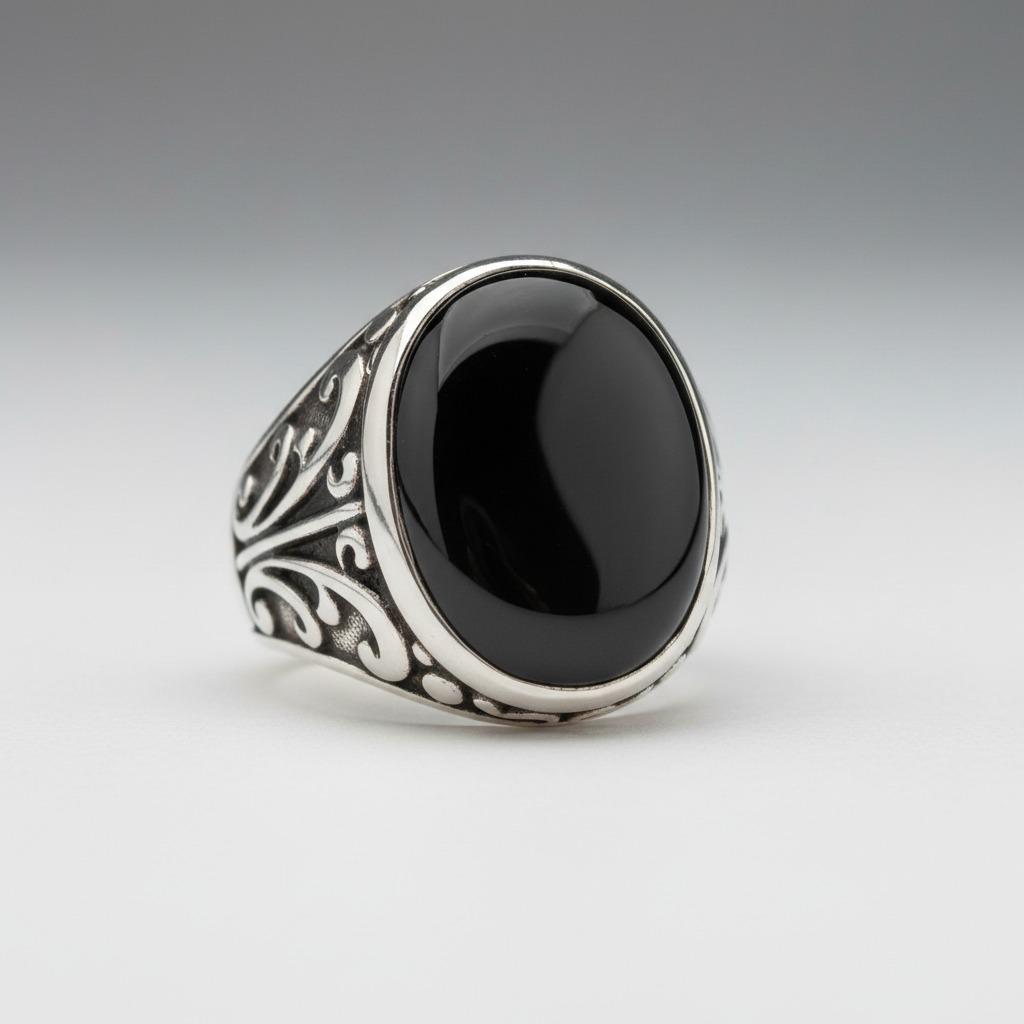
The ring described here is a good example of why the details matter. It appears to be a silver-toned, polished ring with a thick tapered band and a raised oval or round top. The dark center and surrounding light accents give it a signet-style, statement look. That kind of construction can work well for fashion jewelry, formal wear, or gifting, but it also raises practical questions about casting quality, setting security, and long-term durability.
Why this style keeps showing up in the market
Large decorative rings have stayed relevant because they do several jobs at once. They read as jewelry, but they also serve as a visible style marker. A bold top setting creates presence without needing a full set of matching pieces. That is useful for consumers who want one item that does most of the visual work.
For buyers, the appeal is straightforward. A finger ring with a substantial top can sit in a gift box well, photograph well, and sell as either daily fashion or occasion wear. The shape also leaves room for variation: stone-look inserts, enamel, resin, glass, cabochons, or mixed-metal details. In other words, the form is flexible even when the production method is not.
That flexibility is also where sourcing risk starts. Two rings may look similar on a product page and behave very differently once they are worn for a few weeks.
Quick reference: what to check before you place an order
If you are evaluating a ring like this, the fastest way to sort good samples from risky ones is to look at a handful of practical points.
1. Band construction
A thick tapered band usually feels more substantial and is less likely to warp than a thin one, but only if the casting is clean. Look for uniform sidewalls, smooth transitions at the shoulders, and no visible pits near the base.
2. Top setting security
The raised top is the feature that sells the piece, and it is also the area most likely to fail. Check whether the center insert is seated evenly and whether the surrounding accents are securely set. Any looseness in the crown area is a warning sign.
3. Finish quality
A polished silver-toned finish can look premium, but it also exposes flaws quickly. Surface scratches, casting lines, and uneven plating are easier to spot on reflective jewelry than on matte products.
4. Wear comfort
Bold rings should still be comfortable. Underside edges should not feel sharp, and the top should not tip excessively. A heavy-looking ring can still be wearable if the geometry is right.
How these rings are typically made
The most likely production route for this kind of finger ring is jewelry casting followed by finishing and setting. That is a broad category, but it is the right one for buyers to understand.
The band and top structure are commonly cast as a metal body, then polished and plated or finished to achieve the silver-toned appearance. After that, the center insert and surrounding accents are added. Depending on the design, those accents may be stones, bead-like elements, enamel, or synthetic inlays. The exact material cannot be confirmed from appearance alone, and it should not be assumed.
For sourcing teams, the important point is not naming every process perfectly. It is understanding where quality can drift.
- During casting, small defects can hide inside thicker parts of the band.
- During polishing, corners and raised edges can lose definition if the process is too aggressive.
- During setting, uneven pressure can leave the center insert proud, loose, or off-center.
A ring with a large top makes these issues more visible. That is useful in one sense: problems are easier to spot. But it also means buyers should inspect samples under good light rather than relying on photos alone.
Material and finish choices that change the final product
The visible silver-toned metal look suggests a fashion-jewelry build rather than something minimal or delicate. That opens up a few common material paths, though the exact base metal is unknown here.
A polished finish gives the ring a cleaner, more formal feel. It also tends to pair well with a dark center insert because the contrast makes the top setting read clearly from a distance. The light-colored surrounding accents add another layer of contrast and can make the piece look more ornate without changing the overall silhouette.
For buyers, the finish question is not merely aesthetic. It affects perceived value and returns. A bright reflective finish can look expensive at first glance, but any wear marks will show earlier. If the item is intended for frequent use, ask how the surface is protected and how the finish responds to rubbing, handling, and storage.
Selection criteria for sourcing teams
If you are buying finger ring styles for retail, gifting, or promotional use, the decision usually comes down to a few practical filters.
Use case
A statement ring can work as everyday fashion, but many of these designs perform better as occasion pieces. If the ring is meant for daily wear, prioritize comfort, low snag risk, and setting durability.
Target audience
A bold signet-style ring suits buyers who want visible, masculine, unisex, or fashion-forward styling. The same design may feel too heavy for a minimal jewelry customer. That sounds obvious, but it is where mismatched inventory starts.
Packaging and presentation
Because this design has a focal top, packaging matters more than with plain bands. A simple box can help the ring look more intentional and reduce scuffing during transit. For gift channels, presentation often influences conversion as much as the ring itself.
Consistency across batches
When the top setting includes multiple visual layers, small changes in stone color, spacing, or polish are easier to notice. If consistency matters, ask for batch reference samples rather than assuming one approved piece tells the whole story.
Common mistakes buyers make with decorative rings
One common mistake is judging a ring only by its face-up image. A large top can hide a weak band, and a glossy finish can disguise uneven construction. Another is underestimating comfort. Rings with substantial tops can feel fine for short wear and irritating by the end of the day if the inner profile is poorly shaped.
A more subtle problem is assuming that a dark center means a gemstone. It may be stone, but it may also be resin, glass, or enamel. That distinction matters for price positioning, perceived quality, and how you describe the product.
It is also worth being careful with expectations around “silver-toned.” That phrase describes appearance, not necessarily material. Buyers sometimes learn that the hard way after placing an order based on visuals alone.
How to evaluate samples without overcomplicating it
You do not need a lab to catch many of the obvious issues. A sensible sample check can start with the basics.
Inspect the ring from the front, side, and underside. Look for symmetry in the top setting, even spacing in the surrounding accents, and clean edges where the band meets the crown. Rub the finish lightly with a soft cloth to see whether it sheds color or dulls too quickly. Rotate the ring in hand and note whether the setting catches on fabric.
If the piece is intended for resale, ask a simple but important question: would a customer wear this comfortably for several hours, or would they admire it in a box and then leave it there? That distinction tends to separate durable fashion pieces from fragile display items.
FAQ buyers tend to ask
Is a finger ring like this suitable for everyday use?
Potentially, yes, but that depends on the actual build quality. A thick band helps, but the top setting and finish need to hold up under regular wear.
Can you tell if the center is a real gemstone?
Not reliably from appearance alone. The center could be stone, glass, resin, or enamel. It should be verified by the supplier.
What makes this style commercially attractive?
It offers strong visual impact, gift appeal, and easy styling. It also photographs well, which matters more than many buyers like to admit.
A practical next step
If you are sourcing a finger ring in this style, start by requesting clear material confirmation, finish details, and sample photos from multiple angles. Then check the sample for setting stability, comfort, and surface quality before you build a larger order around it.
A ring with a bold top can be a solid product when the details are controlled. When they are not, the flaws show up fast. That is why the safest buying decision is usually the least glamorous one: inspect the construction first, then decide whether the look is strong enough to carry the line.